|

|
Developmental regulation of heparan sulfate proteoglycan synthesis during Drosophila embryogenesis.
Abstract 2005 MHE Conference
Douglas Bornemann, Sangbin Park and Rahul Warrior.
Department of Developmental and Cell Biology and
Developmental Biology Center, University of California, Irvine, Irvine CA 92617.
Signaling by the BMP4 homolog Decapentaplegic (Dpp) is critical for cell fate specification in a wide variety of tissues and at
several stages during Drosophila development. The most extensively studied roles for Dpp are in patterning the dorsal region of
the early embryo and in regulating cell proliferation and patterning in the wing imaginal discs. Dpp activity in the wing disc
requires heparan sulfate proteoglycans (HSPGs), and mutations in tout velou (ttv) and sister of tout velou (sotv) that encode
the GAG chain polymerases, impair Dpp signaling.
Ttv and Sotv activities are also essential for Hedgehog (Hh) and Wingless (Wg) signaling, both in the imaginal discs as well as in
the embryo.
Surprisingly however, embryos lacking ttv, sotv and other HSPG biosynthetic enzymes do not show any alterations in dorsal
patterning, a phenotype characteristic of disruptions in the Dpp pathway. Thus our data suggested that the Dpp pathway, in
contrast to the Hh and Wg pathways, appears to be differentially sensitive to loss of HSPGs at different developmental stages.
In order to understand the basis for these observations we examined the temporal regulation of GAG chain addition to HSPG
core proteins. We found that GAG chain synthesis is under tight developmental control. Essentially no synthetic activity is
detectable in the first three hours of embryogenesis with a rapid onset between three and four hours following fertilization.The
early time period when the biosynthetic process is inactive correlates precisely with the interval during which a Dpp/BMP activity
gradient is established, while the onset of GAG chain addition coincides with the time when Hh and Wg signaling first become
active in patterning the embryonic epidermis. We find that the timing of GAG chain addition is not controlled by the regulated
expression or activity of a pathway component. Instead our data argue that GAG chain synthesis is controlled at a
post-transcriptional level through regulated translation of at least one of the GAG chain polymerases.
Interestingly, this regulatory mechanism appears to be phylogenetically conserved, suggesting that stage or tissue-specific
regulation of GAG chain addition could represent an important strategy in altering the sensitivity of specific signaling pathways
at unique stages during development.
Abstract 2005 MHE Conference
Douglas Bornemann, Sangbin Park and Rahul Warrior.
Department of Developmental and Cell Biology and
Developmental Biology Center, University of California, Irvine, Irvine CA 92617.
Signaling by the BMP4 homolog Decapentaplegic (Dpp) is critical for cell fate specification in a wide variety of tissues and at
several stages during Drosophila development. The most extensively studied roles for Dpp are in patterning the dorsal region of
the early embryo and in regulating cell proliferation and patterning in the wing imaginal discs. Dpp activity in the wing disc
requires heparan sulfate proteoglycans (HSPGs), and mutations in tout velou (ttv) and sister of tout velou (sotv) that encode
the GAG chain polymerases, impair Dpp signaling.
Ttv and Sotv activities are also essential for Hedgehog (Hh) and Wingless (Wg) signaling, both in the imaginal discs as well as in
the embryo.
Surprisingly however, embryos lacking ttv, sotv and other HSPG biosynthetic enzymes do not show any alterations in dorsal
patterning, a phenotype characteristic of disruptions in the Dpp pathway. Thus our data suggested that the Dpp pathway, in
contrast to the Hh and Wg pathways, appears to be differentially sensitive to loss of HSPGs at different developmental stages.
In order to understand the basis for these observations we examined the temporal regulation of GAG chain addition to HSPG
core proteins. We found that GAG chain synthesis is under tight developmental control. Essentially no synthetic activity is
detectable in the first three hours of embryogenesis with a rapid onset between three and four hours following fertilization.The
early time period when the biosynthetic process is inactive correlates precisely with the interval during which a Dpp/BMP activity
gradient is established, while the onset of GAG chain addition coincides with the time when Hh and Wg signaling first become
active in patterning the embryonic epidermis. We find that the timing of GAG chain addition is not controlled by the regulated
expression or activity of a pathway component. Instead our data argue that GAG chain synthesis is controlled at a
post-transcriptional level through regulated translation of at least one of the GAG chain polymerases.
Interestingly, this regulatory mechanism appears to be phylogenetically conserved, suggesting that stage or tissue-specific
regulation of GAG chain addition could represent an important strategy in altering the sensitivity of specific signaling pathways
at unique stages during development.
Research authored by Dr. Warrior
Click the tab and a window will appear.
List of Publications via PubMed
(NIH National Library of Medicine)
List of Publications via PubMed
(NIH National Library of Medicine)


| Dr. Warrior's research |
| ||||||||||||||||||||||||||||||||||||||||||||||||||||||||||||||||||||||||||||||||||||||||||||||||||||||||||||||||||||||||||||||||||||||||||||||||||||||||||||||||||||||||||||||||||||||||||||


| ||||||||||
2009 Conference abstract
Developmental Regulation of Heparan Sulfate Proteoglycan Synthesis
Rahul Warrior, Ph.D.
Developmental Biology Center, and Department of Developmental and Cell Biology, University of California, Irvine.
email: rwarrior@uci.edu
In the fruitfly Drosophila, the genes toutvelou (ttv) and sister of toutvelou (sotv) encode GAG polymerase subunits
orthologous to human EXT1 and EXT2 that are affected in Hereditary Multiple Exostoses. We isolated mutations in sotv, and
showed that both Sotv and its partner co-polymerase Ttv, are essential for enzymatic activity. Importantly we found that
mutations in sotv and ttv result in wide ranging developmental defects and impair the activity of 3 major signaling pathways –
Hedgehog (Hh), Wnt and Bone Morphogenetic Protein (BMP) - in larval imaginal discs that give rise to adult tissues (Bornemann
et al., 2004, Development 131, 1927-1938). This work highlighted the fact that consequences of mutations in the EXT genes
are likely to reflect dysregulation of multiple growth factor signaling pathways, in contrast to previous studies that argued for a
more restricted effect on Hedgehog signaling alone.
More recently we investigated how loss of sotv and ttv activity affects early embryonic patterning. Surprisingly, in the embryo
the absence of GAG chains perturbs only Wnt/Wg and Hh but not BMP signaling. We found that GAG chain synthesis is under
tight temporal regulation and HSPG core proteins are not glycosylated in the early embryo during the first 3 hours post-
fertilization, when BMP activity specifies cell fates along the dorsal ventral axis. GAG chain synthesis is initiated an hour later
when Wg and Hh signaling play critical roles. The absence of GAG modifications in the early embryo is unexpected since HSPGs
are required for BMP signaling at other stages and argues that the mechanism by which a BMP activity gradient is established in
the embryo is significantly different from that utilized in imaginal discs. The absence of detectable GAG chain polymerase activity
in the early embryo was surprising because high levels of ttv and sotv transcripts are present at these stages. Examination of
the genomic organization, expression data and cDNA clones revealed that these maternally provided transcripts have complex
structures typically associated with mRNAs that are translationally regulated. Our data show that the mRNA structure of ttv is
critical for regulating protein levels, suggesting a novel mechanism for regulating GAG chain synthetic activity. Importantly, this
mechanism is likely to be evolutionarily conserved since we have identified similar complex 5’ UTR in several human enzymes
that play critical roles in GAG synthesis and modification (Bornemann et al., 2008, Development 135, 1039-1047).
Current studies indicate that the 5’ UTR from human Ext1 can function as an IRES and direct regulated translation in
Drosophila. This exciting finding argues that these regulatory mechanisms may be evolutionarily conserved, and that cis-
elements and trans-acting factors identified in Drosophila could be relevant to understanding the basis of the human disease.
Developmental Regulation of Heparan Sulfate Proteoglycan Synthesis
Rahul Warrior, Ph.D.
Developmental Biology Center, and Department of Developmental and Cell Biology, University of California, Irvine.
email: rwarrior@uci.edu
In the fruitfly Drosophila, the genes toutvelou (ttv) and sister of toutvelou (sotv) encode GAG polymerase subunits
orthologous to human EXT1 and EXT2 that are affected in Hereditary Multiple Exostoses. We isolated mutations in sotv, and
showed that both Sotv and its partner co-polymerase Ttv, are essential for enzymatic activity. Importantly we found that
mutations in sotv and ttv result in wide ranging developmental defects and impair the activity of 3 major signaling pathways –
Hedgehog (Hh), Wnt and Bone Morphogenetic Protein (BMP) - in larval imaginal discs that give rise to adult tissues (Bornemann
et al., 2004, Development 131, 1927-1938). This work highlighted the fact that consequences of mutations in the EXT genes
are likely to reflect dysregulation of multiple growth factor signaling pathways, in contrast to previous studies that argued for a
more restricted effect on Hedgehog signaling alone.
More recently we investigated how loss of sotv and ttv activity affects early embryonic patterning. Surprisingly, in the embryo
the absence of GAG chains perturbs only Wnt/Wg and Hh but not BMP signaling. We found that GAG chain synthesis is under
tight temporal regulation and HSPG core proteins are not glycosylated in the early embryo during the first 3 hours post-
fertilization, when BMP activity specifies cell fates along the dorsal ventral axis. GAG chain synthesis is initiated an hour later
when Wg and Hh signaling play critical roles. The absence of GAG modifications in the early embryo is unexpected since HSPGs
are required for BMP signaling at other stages and argues that the mechanism by which a BMP activity gradient is established in
the embryo is significantly different from that utilized in imaginal discs. The absence of detectable GAG chain polymerase activity
in the early embryo was surprising because high levels of ttv and sotv transcripts are present at these stages. Examination of
the genomic organization, expression data and cDNA clones revealed that these maternally provided transcripts have complex
structures typically associated with mRNAs that are translationally regulated. Our data show that the mRNA structure of ttv is
critical for regulating protein levels, suggesting a novel mechanism for regulating GAG chain synthetic activity. Importantly, this
mechanism is likely to be evolutionarily conserved since we have identified similar complex 5’ UTR in several human enzymes
that play critical roles in GAG synthesis and modification (Bornemann et al., 2008, Development 135, 1039-1047).
Current studies indicate that the 5’ UTR from human Ext1 can function as an IRES and direct regulated translation in
Drosophila. This exciting finding argues that these regulatory mechanisms may be evolutionarily conserved, and that cis-
elements and trans-acting factors identified in Drosophila could be relevant to understanding the basis of the human disease.

The MHE Research Foundation, we comply with the HONcode standard for health trust worthy information: By the Health On the Net Foundation. Click
here to verify.# HON Conduct 282463 and is linked on the NIH National Library of Medicine, Directory of Health Organizations (SIS) website, as well as
the link for Patient Information on The Diseases Database a cross-referenced index of human disease, and the Intute: health & life sciences a free
online service providing access to the very best Web resources for education and research located in the UK
here to verify.# HON Conduct 282463 and is linked on the NIH National Library of Medicine, Directory of Health Organizations (SIS) website, as well as
the link for Patient Information on The Diseases Database a cross-referenced index of human disease, and the Intute: health & life sciences a free
online service providing access to the very best Web resources for education and research located in the UK
The MHE Research Foundation is proud to be working with the EuroBoNeT consortium, a European Commission granted Network of Excellence for
studying the pathology and genetics of bone tumors.
studying the pathology and genetics of bone tumors.
| This website is regularly reviewed by members of the Scientific and Medical Advisory Board of the MHE Research Foundation. All online submission forms use (SSL 3.0, RC4 with 128 bit encryption (High); RSA with 1024 bit exchange) Protocol with Privacy protection. Our goal is to make this website as safe and user friendly as possible. |


| The MHE Research Foundation is a participating member organization of the United States Bone and Joint Decade, (USBJD) & the USBJD Rare Bone Disease Patient Network |
| Email the webmaster: webmaster@mheresearchfoundation.org Materials on this website are protected by copyright Copyright © 2009 The MHE Research Foundation |
| This web page was updated last on 9/19/09, 4:0O pm Eastern time |
| Written consent must be obtained to attach web pages or the files attached to this website. Please email webmaster. |
Disclaimer: While many find the information useful, it is in no way a substitute for professional medical care.
The information provided here is for educational and informational purposes only. This website does not engage in the practice of medicine. In all cases we
recommend that you consult your own physician regarding any course of treatment or medicine.
The information provided here is for educational and informational purposes only. This website does not engage in the practice of medicine. In all cases we
recommend that you consult your own physician regarding any course of treatment or medicine.


The MHE Research Foundation is proud to be an affiliate of the Society For Glycobiology



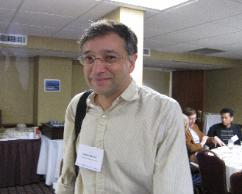
| Photo's taken during the Third International MHE Research Conference |


